





 Send Inquiry
Pleated Bag Dust Collector Systems
MOQ : 1 Number, ,
Pleated Bag Dust Collector Systems Specification
- Efficiency
- 99%
- Temperature
- -10C to +80C
- Measurement
- Particle Size, Air Flow
- Air Flow
- Up to 100000 m3/hr
- Sensor Type
- Differential Pressure
- Display Type
- Analog / Digital (Optional)
- Scrubber Type
- Dry
- Orientation
- Vertical
- Power Source
- Electric
- Automation Grade
- Semi-automatic / Automatic
- Instruments Type
- Dust Collector
- Usage & Applications
- Industrial Dust Collection, Air Filtration, Cement, Steel, Pharmaceutical, Food & Beverage
- Product Type
- Pleated Bag Dust Collector System
- Material
- Mild Steel (MS) / Stainless Steel (SS)
- Cooling System
- Air Cooled
- Noise Level
- Below 80 dB
- Reactor Thickness
- 3 - 8 mm
- Processing Time
- Continuous
- Capacity
- 1000 - 100000 m3/hr
- Voltage
- 415 V
- Weight
- Variable as per model
- Dimension (L*W*H)
- Customizable / As per design
- Surface
- Powder Coated / Painted
- Number of Bags
- 6 / 12 / 24 / 36 / 48 (as per model)
- Dust Discharge System
- Manual or Rotary Airlock Discharge
- Fan Mounting
- Direct or Separate
- Filter Area
- Up to 72 m2 per module
- Filter Media
- Pleated Polyester or PTFE
- Cleaning Mechanism
- Pulse Jet Reverse Air
- Design Standard
- As per industrial safety norms
- Insulation
- Available on request
- Finish
- Anticorrosive Paint Finish
Pleated Bag Dust Collector Systems Trade Information
- Minimum Order Quantity
- 1 Number, ,
- Supply Ability
- 8 Per Week
- Delivery Time
- 4-6 Week
About Pleated Bag Dust Collector Systems
Pleated Bag Dust Collector Systems
Pleated Bag Dust Collector Systems is a large industrial system which is designed for the pneumatically driven machines for the purification of the high pressure air flowing through the system. It is designed and developed as per the international standards by using premium class engineering materials to provide higher rigidity and sturdiness. This impurity collection unit is equipped with a series of filters with very fine pores for the collection of small dust elements.
Pleated Bag Dust Collector Systems is a large industrial system which is designed for the pneumatically driven machines for the purification of the high pressure air flowing through the system. It is designed and developed as per the international standards by using premium class engineering materials to provide higher rigidity and sturdiness. This impurity collection unit is equipped with a series of filters with very fine pores for the collection of small dust elements.
Optimized Air Filtration for Diverse Industries
Our Pleated Bag Dust Collector Systems deliver superior air filtration across various sectors including cement, steel, pharmaceutical, and food & beverage industries. Featuring customizable capacities up to 100,000 m/hr and vertical orientation, these systems ensure continuous, reliable dust removal. Both manual and automated options are available to adapt to process requirements, ensuring compliant, efficient, and quiet operation with noise levels consistently below 80 dB.
Advanced Design and Durable Construction
Engineered to meet industrial safety standards, these dust collectors are constructed from high-quality mild or stainless steel with anticorrosive finishes. The filter media can be chosen between pleated polyester or PTFE for better particle retention and longevity. Optional insulation, air-cooled systems, and variable reactor thickness help maintain optimal operating conditions and system integrity in challenging environments.
FAQs of Pleated Bag Dust Collector Systems:
Q: How does the pleated bag dust collector system operate in industrial environments?
A: The system operates continuously by drawing in contaminated air, which passes through pleated polyester or PTFE filter bags. Dust particles are trapped on the filter surface, and clean air is released. Automatic pulse jet reverse air cleaning keeps filters unclogged, ensuring reliable airflow and collection efficiency up to 99%.Q: What kind of applications are suitable for these dust collector systems?
A: These collectors are designed for demanding industrial applications, including cement manufacturing, steel processing, pharmaceuticals, food & beverage production, and general industrial dust collection where efficient air filtration and compliance with safety norms are essential.Q: When should the dust discharge mechanism be chosen as manual or rotary airlock?
A: Select manual discharge for low-dust loads or intermittent use, where manual emptying is practical. For high-volume or continuous processes, a rotary airlock system is recommended, providing automatic, dust-tight discharge and optimizing operational efficiency.Q: Where can these dust collector modules be installed, and are their dimensions customizable?
A: The modules are versatile and can be installed in a wide range of industrial facilities. Their dimensions (L*W*H) are fully customizable or designed based on site requirements, allowing adaptation to space constraints or integration into existing system layouts.Q: What are the benefits of the anticorrosive paint finish and air cooling system?
A: The anticorrosive paint finish protects the dust collector from harsh operating environments, prolonging equipment lifespan. The air-cooled system ensures temperature stability and safe operation within a wide thermal range (-10C to +80C), making it suitable for various climates and processes.Q: How is the efficiency of these dust collector systems measured and maintained?
A: Efficiencymeasured up to 99%is ensured through high-performance filter media, pulse jet cleaning, and differential pressure sensors monitoring filter status. Regular maintenance aligned with industrial safety norms and timely filter changes help sustain efficiency and consistent air quality.Q: What options are available for monitoring and automation?
A: Depending on the model, systems can include analog or digital displays for real-time monitoring of particle size, air flow, and differential pressure. Automation grades range from semi-automatic to fully automatic, enhancing process control and reducing operator intervention.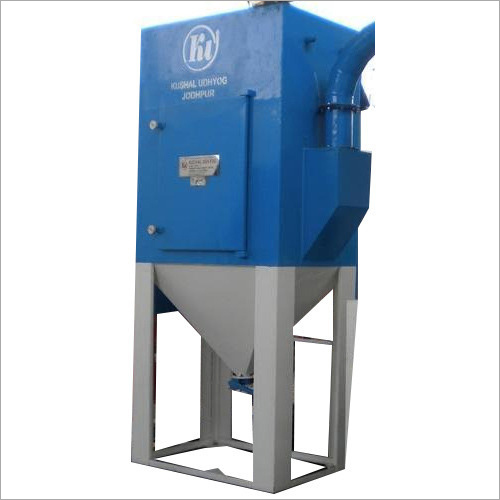
Tell us about your requirement

Price:
Quantity
Select Unit
- 50
- 100
- 200
- 250
- 500
- 1000+
Additional detail
Mobile number
Email


GST : 08AAPPG4490H1ZE
REGD. OFFICE : B-132/1, Krishna Nagar, New Pali Road,Jodhpur - 342005, Rajasthan, India
Phone :08071630600
 Send Inquiry
WORKS : J1 - 382 / 383, Sangariya Mini Growth Centre, Phase - II, JODHPUR - 342 005 (India)


 |
KUSHAL UDHYOG
All Rights Reserved.(Terms of Use) Developed and Managed by Infocom Network Private Limited. |
